Javier Assad has not recorded eighteen outs in a baseball game since June 12. Eight appearances have gone by since that afternoon against San Francisco, and the longest of them ran five innings. Tonight he opens for a Chicago club that has scored 286 runs in 56 home games, and Los Angeles is a -184 favorite in his ballpark anyway.
Four tickets, 7.5 units. Three of them back offenses sitting in the bottom third of the sport in runs per game, which reads like a misprint until you look at who has to get the outs. That is the organizing idea on this card. The marquee sells you a starting pitcher. The money is in the frames he will not be around for.
CINCINNATI TEAM TOTAL OVER 4.5 IS AN OAKLAND BULLPEN BET
J.T. Ginn carries a 3.46 ERA and holds hitters to a .211 average, and both of those numbers are real. He has also walked 49 men in 109.1 innings, 4.03 per nine, which is the highest rate of any starter working a game on this card. His arsenal explains where the free passes come from. He leads with a sinker at 33.4 percent and 93.5 mph, then a changeup at 20.3 percent, a cutter at 17.8, a slider at 15.7 and a four seamer at 12.8. Everything moves. Nothing is a strike-anytime pitch.
Watch what that costs him in a game he technically wins. On July 1 against the Dodgers he threw six innings, gave up three hits and one run, and walked five. That is 104 pitches for eighteen outs. He was excellent, and he was gone before the seventh.
What waits behind him is the reason this ticket exists. The Athletics staff carries a 5.42 ERA and a 1.50 WHIP and has surrendered 176 home runs in 995.1 innings, a rate of 1.59 per nine. On August 2 in Detroit the club emptied five relievers into an 11-0 loss, and Ben Bowden alone gave up four earned runs in a single inning. Cincinnati does not need to solve Ginn. It needs to be within reach of him in the sixth.
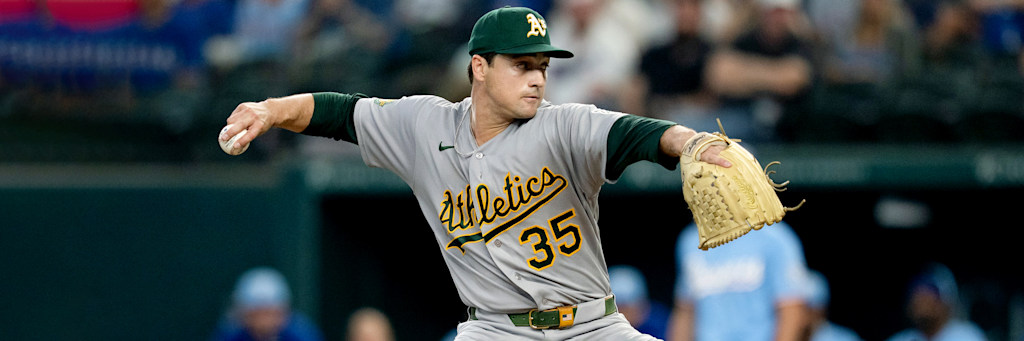
The park helps. Great American Ball Park runs 325 feet down the right field line and 370 to right center, the shortest right side of the three venues hosting a ticket tonight. Cincinnati has hit 79 of its 145 home runs at home in 57 games. Elly De La Cruz is at .276 with a .500 slugging percentage and 20 stolen bases, Sal Stewart has driven in 85 runs with 24 homers, and JJ Bleday owns an .805 OPS with 50 walks in 295 at bats. Against a starter with a 4.03 walk rate, that third name matters more than the first two.
Now the uncomfortable half. Cincinnati averages 4.16 runs a game, 24th in baseball, and this ticket asks that offense to clear 4.5 against a starter running a 3.46 ERA. Worse, the Reds score no better at home than on the road: 231 runs in 57 games at Great American against 231 in 54 away from it. The park adds homers and it does not add runs. Every dollar of this bet is on Oakland's pitching being bad rather than on Cincinnati's hitting being good, and that is a narrower argument than 2 units usually deserves.
THE SAME GAME, THE OTHER WINDOW
Brady Singer is the weakest starter on this card and the Reds are laying anyway. He has a 4.68 ERA, a 1.43 WHIP and 21 home runs allowed in 107.2 innings, and opposing hitters bat .273 against him. He is a sinker and slider pitcher in the most literal sense, 47.5 percent sinkers at 91.3 mph and 29.6 percent sliders at 82.6, with a four seamer he throws 2.9 percent of the time. When the sinker stays down he looks like the man who threw seven shutout innings against Milwaukee on June 22. When it does not he looks like July 29 against Cleveland, four and a third innings, seven hits, four walks.
The price is not really about him. Oakland is 45-67, has lost five in a row, is 2-8 over its last ten and is 24-31 away from home. Cincinnati is 14-12 in one run games and 7-4 in extra innings. At -129 the market is charging a modest toll to back the far better team in a game where both starters are flawed, and the same Oakland relief corps that makes the over attractive makes the moneyline attractive for identical reasons.
WRIGLEY AT 8:05, AND WHO COVERS THE MIDDLE INNINGS
Tarik Skubal has walked 14 batters all season. He has struck out 116 in 96.2 innings, which is 8.29 strikeouts for every free pass, and seven of his sixteen starts have ended with a zero in the walk column. His WHIP is 0.91 and hitters are batting .210. He works off a four seamer at 96.7 mph that he throws 36.5 percent of the time and pairs it with a changeup at 87.2 that he throws a quarter of the time, a ten mile per hour separation on the same arm slot. On July 24 he struck out twelve Royals over seven and a third.
All sixteen of those starts were made in a Detroit uniform. Tonight he takes the ball for Los Angeles.
The Dodgers are the road team and the road is where they hit. Los Angeles has scored 329 runs in 57 games away from Chavez Ravine, 5.77 per game, batting .273 with an .800 OPS. At home those figures fall to 248 runs in 56 games and a .740 OPS. Shohei Ohtani has a .940 OPS with 67 walks, Freddie Freeman is hitting .309, and Max Muncy has 21 home runs.
Which brings it back to Assad. His last completed sixth inning was June 12. Since then: five and two thirds, five, two and two thirds, four and two thirds, five, one, three, four and a third. On July 11 in Cincinnati he gave up two home runs in five innings. A Chicago bullpen that has allowed 168 home runs as a staff is going to be asked for twelve to fifteen outs against the third best offense in baseball, and that is what -184 is really buying.
The counterpoint is loud and it deserves to be. Chicago has the second best offense in the sport at 5.13 runs a game, is 32-24 at Wrigley and scored 286 runs in those 56 home dates. Pete Crow-Armstrong is carrying a .919 OPS with 24 home runs and 26 steals. The Cubs beat these same Dodgers 10-5 in this ballpark last night and Los Angeles has now lost four straight. Bullpen rest cuts the wrong way too: the Dodgers have used eleven relief innings over the last three days against Chicago's eight. Laying -184 requires winning 64.8 percent of the time, and nothing above says this is a mismatch. It says one team has the best starting pitcher in the game and the other has a starter who cannot finish the fifth.
SEATTLE AT 9:40, WHERE THE PARK IS THE ARGUMENT
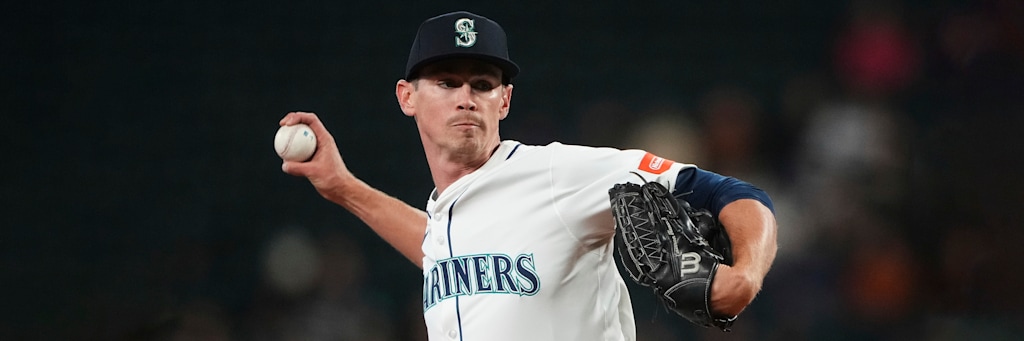
Emerson Hancock has the largest workload of any starter on this card, 110.1 innings over 20 starts, and the cleanest control profile of the group at 2.20 walks per nine. His fastball sits 95.4. His sweeper sits 77.1 and he throws it 17.2 percent of the time. Eighteen miles per hour of separation on a breaking ball is the kind of gap that turns contact into weak contact, and his .217 opponent average and 1.04 WHIP are the receipts. On July 5 he held Toronto to two hits over seven innings in this building.
T-Mobile Park is 390 feet to left center and 387 to right center. Seattle is 32-24 at home and 23-34 on the road, one of the widest venue splits in the league. Detroit is 24-31 away, 12-20 in one run games and 3-7 in extra innings, which is the profile of a team that loses the games it cannot pull away in. The Tigers' relievers threw two innings Saturday and three Sunday and had Monday off, so the rest is even. The park is not.
Troy Melton is the reason this is only a unit. A 1.75 ERA and a .174 opponent batting average across 67 innings is the best run prevention on the board tonight, and he threw seven shutout innings against Baltimore on July 28. Seattle, meanwhile, ranks 28th in baseball at 4.02 runs a game and gets no better at home, 226 runs in 56 dates. Backing a 55-58 club that cannot score, against a starter with a 1.75 ERA, at -118, is a bet on Hancock and the outfield gaps and nothing else. There are cracks worth noting: Melton has walked four batters in two of his last three starts and has given up 8 home runs in those 67 innings, including four in one afternoon against Minnesota on June 9. That is enough to justify a unit. It is not enough to justify more.
HOW TO SIZE IT
| Play | Line | Units | Break-Even | What The Price Is Buying |
|---|---|---|---|---|
| Reds Team Total Over 4.5 | -115 | 2u | 53.5% | A 5.42 Oakland staff ERA and Ginn's 49 walks |
| Reds Moneyline | -129 | 1.5u | 56.3% | A 45-67 opponent on a five game skid, 24-31 away |
| Dodgers Moneyline | -184 | 3u | 64.8% | Skubal's 8.29 strikeout to walk ratio against a short hook |
| Mariners Moneyline | -118 | 1u | 54.1% | Hancock at home in a park that is 390 to left center |
Two of these tickets sit on the same game and they are not independent. If Cincinnati clears 4.5 runs against that Oakland staff, the moneyline usually comes with it, and if Singer gets hit early both tickets die together. Treat the Reds exposure as one correlated position of 3.5 units rather than two separate bets, and size the rest of your night around that fact.
The Dodgers ticket is the largest stake and the least comfortable price, which is the honest way to describe it. Everything else on this card is a unit or two against a bad pitching staff or a friendly ballpark. That one asks you to lay real juice into the second best offense in baseball, in their park, the night after they put ten runs on the board.
Yesterday's card went 0-2 for a loss of 5.92 units. Both losers were moneyline favorites who ran into a bullpen. That is not a reason to change the process. It is a reason to remember what these prices are actually made of.
August 3 Sharp Money Card MLB Totals Betting Strategy 2025-2026 Track Record Bankroll Management Guide 2026 Futures Board Full Archive