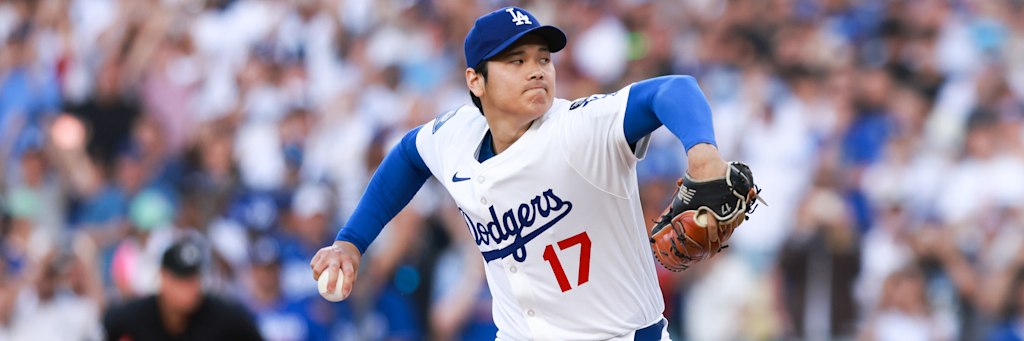
You want to know the scariest thing in baseball right now? It's not a lineup, a bullpen, or a closer. It's Shohei Ohtani walking to the mound with a 0.00 ERA, six scoreless innings already in the bank this season, and the best offense in baseball standing behind him. The Dodgers are 9-2, they're hitting .292 as a team, they're slugging .501, and now they get their two-way unicorn on the bump at Rogers Centre for the series finale of a World Series rematch. Dylan Cease is a good pitcher. He's thrown 18 strikeouts in two starts for Toronto. But good and generational are two very different things, and today the generational talent has every edge in his corner.
Ohtani's Return to the Mound Has Been Flawless
Let's get right into what Ohtani did in his first start back on the mound this year. He threw six innings of one-hit, shutout baseball against Cleveland on 87 pitches. Six strikeouts, three walks, and a total command of his arsenal that made it look like he never missed a single start, let alone an entire season recovering from UCL reconstruction. The velocity was there. The splitter was devastating. The pitch tunneling was so good that hitters were swinging through pitches they should have been laying off, and taking pitches they should have been swinging at.
What makes Ohtani so impossible to solve is the combination of velocity and deception. He's throwing 97-99 mph fastballs that ride up through the zone, and then tunneling a splitter off that same release point that drops off the table at 88-89 mph. Hitters have to make a decision in about 400 milliseconds whether that pitch is going to stay up or dive down. Against most pitchers, the speed differential isn't enough to completely fool major league hitters. Against Ohtani, the 10 mph gap between the fastball and splitter, delivered from the same arm slot and tunneled through the same visual corridor, is genuinely unfair.
He's being managed on a pitch count, likely capped around 85-90 pitches and five to six innings. But here's the thing about Ohtani in a shortened workload: he doesn't pace himself. He comes out throwing gas from the first pitch, attacks the zone aggressively, and tries to put hitters away early in counts. When you combine that approach with a deep Dodgers bullpen that can lock down the final nine outs, you get a formula that's been nearly unbeatable in the early going this season.
The Offensive Chasm Is Real
This is where the Dodgers' case gets really strong. Los Angeles isn't just winning games, they're dominating the sport offensively. A .292 team batting average is first in the major leagues. A .501 slugging percentage is first in the major leagues. An on-base percentage of .359 is third. They hammered Toronto 14-2 earlier in this series with five home runs, including two from catcher Dalton Rushing. This is a lineup that can produce runs against anyone, and they've proven it consistently through the first 11 games of the season.
Now compare that to what Toronto's offense has done. The Blue Jays are hitting .231 as a team with a .348 slugging percentage. Those numbers rank in the bottom third of baseball. They've scored just 36 runs through their first games, tied for 23rd in the sport. This is a team that can't consistently put pressure on opposing pitching, and now they're facing a guy who threw six innings of one-hit ball in his last outing. The matchup nightmare isn't just on the mound for Toronto. It's the fact that even if Cease keeps the Dodgers in check for five or six innings, the Blue Jays might not score enough off Ohtani to make it matter.
Cease has been impressive, no question. Twelve strikeouts in his Blue Jays debut was historic, and his 2.79 ERA through two starts shows he's capable of being an ace-caliber pitcher. But his 1.34 WHIP tells you he's allowing traffic on the bases between those strikeouts. Against a lineup as deep and talented as the Dodgers, those baserunners eventually come around to score. Los Angeles doesn't need to shell Cease for six runs. They just need to scratch across three or four, and given their offensive profile, that's well within the expected outcome.
The World Series Rematch Factor
These two teams played a seven-game World Series last October that the Dodgers won to go back-to-back for the first time since the 2000 Yankees. That series went the absolute distance, with Game 7 requiring extra innings before the Dodgers pulled it out 5-4 in the 11th on a Will Smith home run. The psychological weight of that loss hangs over this Blue Jays franchise. They had a championship in their grasp, they were at home in Rogers Centre for Game 7, and they couldn't close it out.
Now the Dodgers come back to Rogers Centre for the first time since that series, and they've already sent a message. The 14-2 beatdown earlier in this series wasn't just a baseball game. It was a statement that the pecking order hasn't changed. The defending champions walked into the building where they celebrated a title last November and stomped the team that tried to take it from them. That kind of confidence is contagious, and it carries forward into today's matchup with their biggest weapon taking the mound.
Rogers Centre Favors the Better Offense
Unlike the outdoor cold-weather parks that have been suppressing offense across the league this week, Rogers Centre plays indoors with the retractable roof closed. That means consistent conditions, the ball carries normally, and hitters can be comfortable at the plate without worrying about stinging hands on inside pitches. For a Dodgers lineup that's been mashing at this level all season, indoor conditions are only going to amplify their advantage.
The park factor is neutral to slightly hitter-friendly, which means the Dodgers' power bats get to operate in their natural environment. There's no cold-weather suppression to bail out Cease if he makes a mistake in the zone. Every mislocated fastball, every hanging slider, has the potential to end up in the seats when the Dodgers are swinging this well. And with Kyle Tucker in the lineup for Los Angeles after his massive offseason signing, the protection around Ohtani, Mookie Betts, and Freddie Freeman means there's no easy way through this order.
The Bottom Line
You're getting the best team in baseball, with the most electric pitcher in the sport on the mound, at a price that doesn't even reach -200. The Dodgers are 9-2, they lead the major leagues in batting average and slugging, they already beat Toronto 14-2 earlier in this series, and now they send Ohtani to the mound against a Blue Jays offense that ranks near the bottom of the league in every meaningful category.
Cease is good. He's not Ohtani-level good. The Blue Jays offense is struggling. The Dodgers offense is the best in the sport. Rogers Centre provides no weather-related lifeline for Toronto's pitching staff. And the reigning back-to-back champions have that look in their eye that says they're not planning on losing the series finale of a World Series rematch.
Give me the Dodgers moneyline. Ohtani is the Hammer today, and he's going to put on a show at the same stadium where he helped clinch a championship five months ago. This is the kind of spot you circle on the calendar and attack with conviction. The best team, the best pitcher, the best price. That's a Hammer.