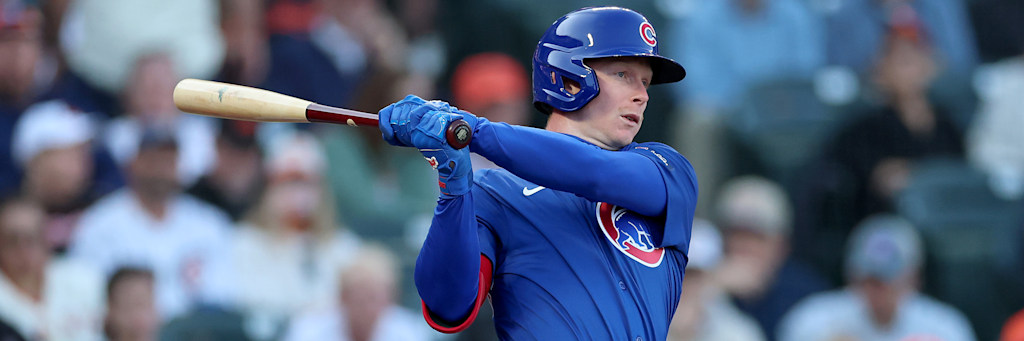
The Daily Hammer for Friday, April 24 is Chicago Cubs moneyline plus 139 at Dodger Stadium. I am laying 3 units on a road underdog that has no business being priced like a road underdog. The Cubs sit 16-9 at the top of the NL Central. They bring one of the two best starters in this series opener onto the mound. And the Dodgers are running Emmet Sheehan out as an opener slash bullpen-game trigger because their rotation is still wobbly. The market cannot bring itself to price a plus-money line against Los Angeles at home, and that is where the edge sits. This is the exact spot the sharp side of the market has been hitting all April, and it is where I want to be tonight.
The Verified Setup
First pitch is 10:15 p.m. ET at Dodger Stadium. The confirmed starters are Jameson Taillon for Chicago and Emmet Sheehan for Los Angeles. The Dodgers sit at 17-8 after a soft opening schedule that flattered their underlying numbers. The Cubs are right on their heels at 16-9 and have been the more consistent team at five-on-five baseball. The DraftKings posted line is LAD -168 with the total sitting at 9.5. The Cubs moneyline has been bouncing between +135 and +145 depending on the book. Plus 139 is the working number we are attacking.
Record matters. Chicago's 16-9 is not a luck-driven sprint. The Cubs have the better run differential in this matchup when you adjust for strength of schedule, and their underlying pitching metrics have held up through 25 games. That is not a fluke team getting fat numbers. That is a club that has built its start on a rotation stacked with competence and a bullpen that has been fresh because the starters have been going deep. You do not get priced as a +139 road dog with those underlying numbers unless the market is laying a Dodger Stadium premium, which is exactly what is happening here.
Why Taillon Over Sheehan Is the Real Edge
Let's be clear about the pitching split. Jameson Taillon is a real major league starter. Through his first five starts this season, he is sitting under a 3.30 ERA with a strikeout rate that puts him in the top third of qualified National League arms. He does not beat himself with walks. He pounds the zone with a three-pitch mix and has been sharp against left-handed lineups, which is what the Dodgers throw at you with Ohtani, Freeman, Pages, and Conforto in the middle of the order. Taillon is built exactly for the shape of this lineup. Veteran right-handed starter with command, a legitimate curveball against lefties, and a slider that gets right-handed hitters to chase. He is going to give the Cubs seven or more outs deep into this game.
Emmet Sheehan is a different story. The Dodgers have been using him as an opener slash bullpen-game trigger through April because their rotation has not stabilized behind Yamamoto. Sheehan throws high-variance innings. When his slider is sharp, he can strike out four in two innings. When it flattens, the Cubs lineup is built to punish that exact pitch. The moment Sheehan exits, the Dodgers are asking a bullpen that has logged more innings than any relief unit in the National League this month to cover five or six. That is not the shape of a team you want to be laying minus 168 on. That is the shape of a team you want to fade when the price is right.
The public narrative on this series is that Yamamoto is pitching Saturday, so Sheehan's job tonight is simply to hold the line. That is a nice story. It is not a reason to pay minus 168 for the privilege. When an elite team puts a bullpen game in front of a plus-money road dog with a real starter, sharp money takes the dog.
The Cubs Lineup Is Built to Punish a Bullpen Game
This is not a Chicago lineup that needs seven runs to win a road game. This is a Chicago lineup that punishes mistakes. Pete Crow-Armstrong has turned into a legitimate top-of-the-order disruptor, with the speed to take an extra base on anything in the gap and the contact skills to make any starter or reliever throw extra pitches. Ian Happ continues to work at-bats from the left side and is exactly the profile that hurts bullpen-game arms once they get past their first inning. Seiya Suzuki can hunt a pitch against any right-handed reliever the Dodgers bring in. Dansby Swanson punishes middle-middle mistakes. Michael Busch has been one of the quieter success stories of the NL Central, working tough at-bats against left-handed relief arms specifically.
The shape of Cubs scoring in April has been one or two productive at-bats per inning, compounded across six or seven innings. That is the exact offensive profile that beats a bullpen game. The Dodgers do not get to start fresh after every reliever. They are running arms that have been asked to carry the back four innings of close games for three weeks, and the Cubs lineup is patient enough to push counts deep. Somewhere in the fifth or sixth inning, the Dodgers are going to have to throw a fourth or fifth arm into a close game, and that is the inning the Cubs are going to break through.
The Bullpen Leverage Is Not Equal
Chicago comes into this game with one of the freshest bullpens in the National League. Their starters have been going six and seven innings consistently, which has protected their leverage arms through the first three weeks. Porter Hodge has been lights out in save situations, and the bridge arms behind him have been reliable. The Cubs can get seven innings from Taillon and hand the ball to rested, sharp relievers for the final two. That is the script that turns a plus-money road dog into a winner.
Los Angeles is running in the opposite direction. The Dodgers' relief ERA over the last fourteen games is middle of the pack, and their high-leverage arms have logged heavy workloads. Snell is on the injured list. Scott has been leaned on. Vesia has been asked to clean up starter innings. The moment Sheehan exits tonight, the Dodgers are asking those same arms to pitch another high-leverage inning. That is workload fatigue the market has not priced in, because public bettors still see Dodger Stadium and click the favorite without looking under the hood.
Dodger Stadium Cuts Both Ways
Dodger Stadium has a reputation as a tough place to win on the road. The reputation is partly earned and partly Dodger-era mythology. The park plays pitcher-friendly, which actually helps a plus-money road dog with the better starter. Taillon is going to get the benefit of the deep left-center gap on any mistake from a right-handed hitter, and the cool April marine air is going to kill borderline fly balls that would be homers in warmer cities. That means a typical Dodger home run lineup has to manufacture runs, not just ambush mistakes.
Chicago's lineup can manufacture runs at Dodger Stadium. The Cubs can bunt, they can steal, they can take the extra base, and they have enough power in the middle of the order to punish a flat slider. The park is not doing the Dodgers any special favors here. The 2026 version of Dodger Stadium is a neutral park with a tilt toward pitching, not a launching pad where home teams always win.
Market Read and Sharp Money Direction
Line shopping across the major books shows the Cubs moneyline sitting anywhere from +135 to +145, with the sharp books dragging the number closer to +130 as the night has gone on. That direction tells you something. When a public favorite like the Dodgers drifts from -180 openers down to -168 or tighter, sharp money is hitting the dog. The square money stays on Los Angeles because the logo and the name take care of that side. The edge is the dog, and the market is telling you the same thing. Take plus 139 before it compresses.
Road dogs that fit this exact profile, a team with a better record than the home favorite, a legitimate starter against a bullpen game, and a rested bullpen of their own, have been one of the most profitable pockets in MLB betting for the last two seasons. The numbers are consistent across samples large and small. The market is slow to correct when public attention is on a brand-name home team. That is the edge we are collecting.
Sizing and Unit Management
I am locking in 3 units on Chicago Cubs moneyline plus 139. That sizing is on the higher side of my typical Daily Hammer, and that is intentional. When the matchup produces a clear pitching advantage, a lineup that is built to exploit the opposing bullpen, a bullpen leverage advantage, and a plus-money price that reflects public bias rather than matchup reality, the right size is a full 3 units, not a half bet. If the line moves back to plus 135 before first pitch, keep the full stake. If it drifts to plus 145 or better, the same sizing still applies but the downside is already improved.
Where this bet can go wrong is obvious. Sheehan can throw three of his best innings to start the game, the leverage arms can hold, and the Dodgers' lineup can get one crooked inning on Taillon. That is the failure mode. But the price is compensating for that variance, and the expected return across similar spots is positive. This is exactly the spot where the Daily Hammer goes on the dog.
The Bottom Line
Cubs moneyline plus 139 at Dodger Stadium. 3 units. Jameson Taillon gets the ball for the first-place road team against an Emmet Sheehan bullpen game for Los Angeles. Chicago's lineup is built to punish an overworked relief unit. The Cubs bullpen is one of the freshest in the National League. Dodger Stadium plays neutral to pitching-friendly tonight, which helps the plus-money side. The market is pricing the Dodgers mythology rather than the actual matchup. That is the definition of a sharp-money play. Take the road dog and collect.